Commercial epoxy flooring on a New South Wales industrial floor

Food Grade Flooring in Sydney

Seamless, coved, washdown-ready floors for commercial kitchens, food manufacturing, cold storage and processing facilities across Sydney and the greater metropolitan area.

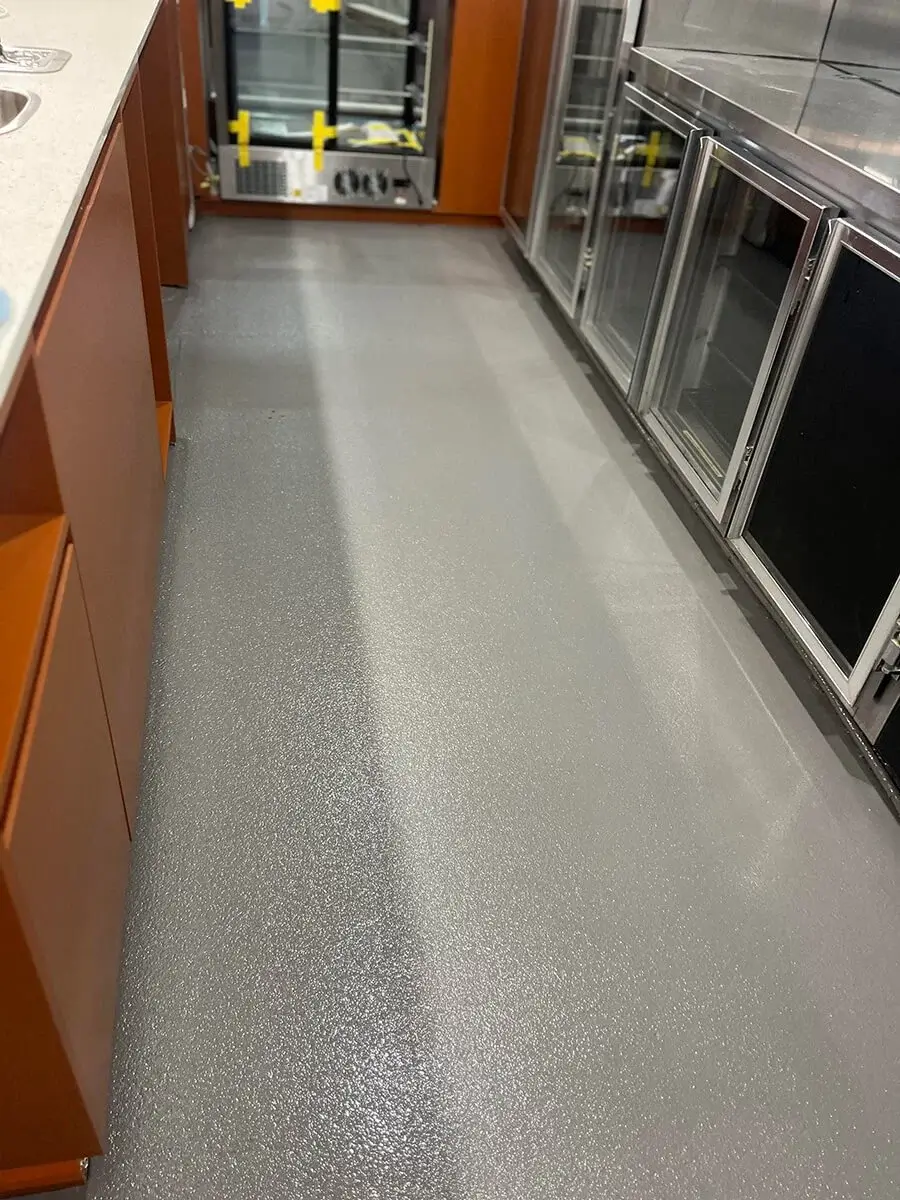
Seamless resin floor in a commercial kitchen

Why food grade floors are specified differently

A food production floor has to survive things a warehouse floor never encounters. Hot washdown followed by chilled product, caustic cleaning chemicals, fats and oils, trolley and pallet traffic, and standing water if the falls are wrong. In a Sydney kitchen running to a hotel's service pattern, the hard part is finding the hours to lay it at all.

Thermal shock is what fails ordinary epoxy. A floor hosed at 80°C and then cooled will move, and a system not chosen for that will debond. Where washdown is part of daily operation we'd generally specify polyurethane cement, often called PU screed — it copes with the temperature swing and the steam cleaning that standard epoxy doesn't. Where conditions are gentler, an epoxy system is the more economical answer.

Which way we'd go depends on how your space actually runs. Tell us the washdown regime and we'll tell you what it needs before you commit to anything.
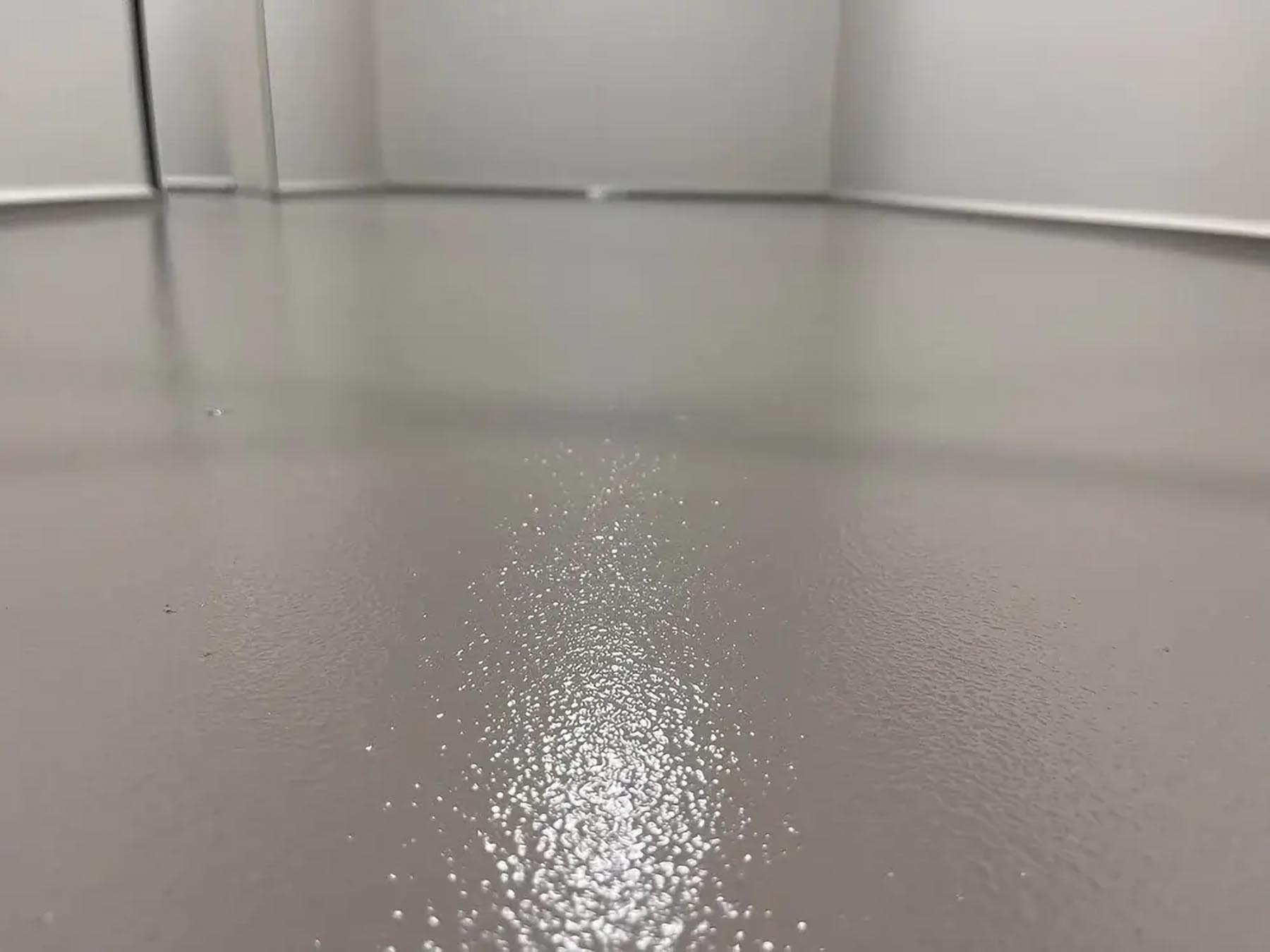
Epoxy flooring across a warehouse floor
coving
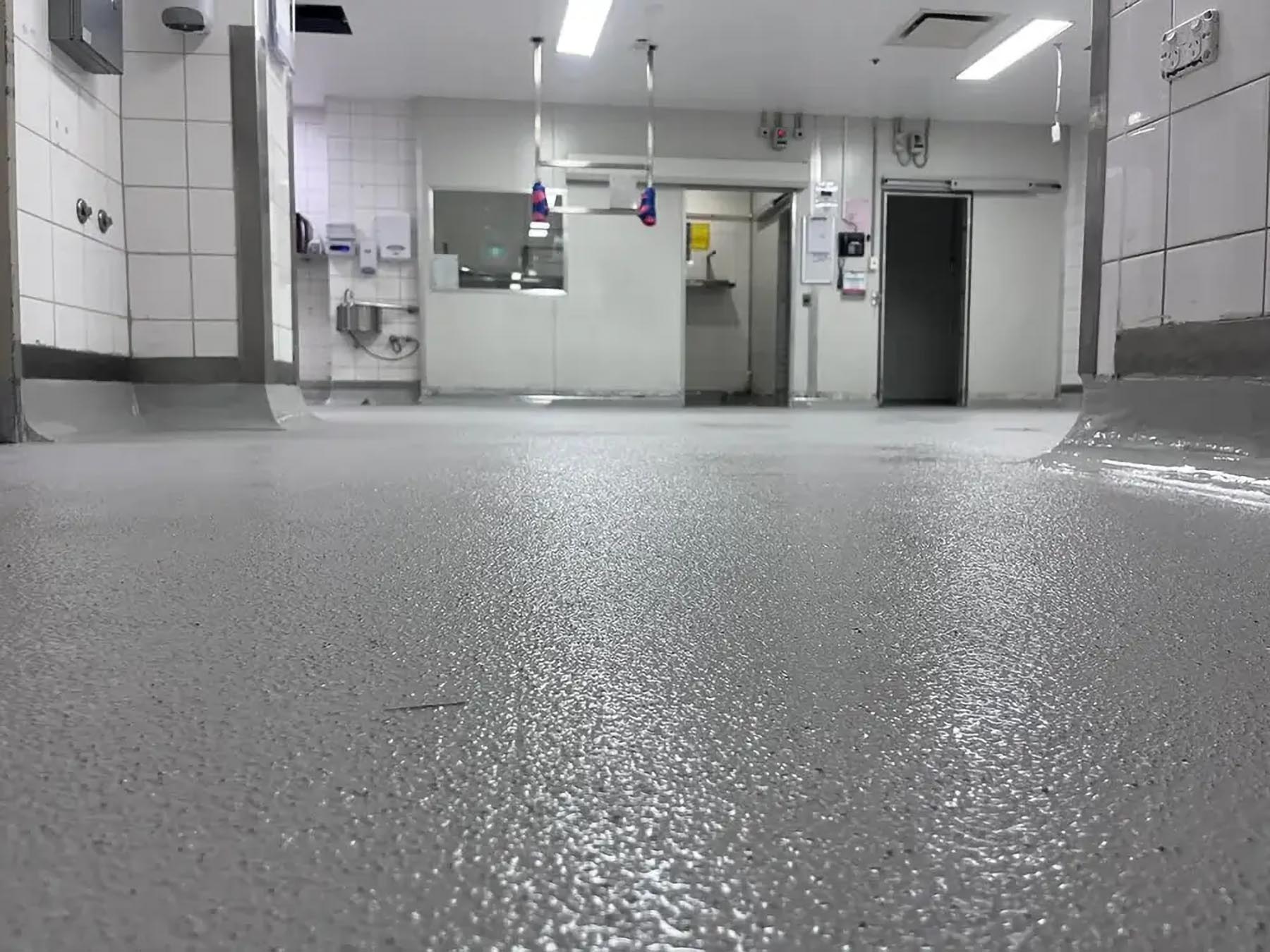
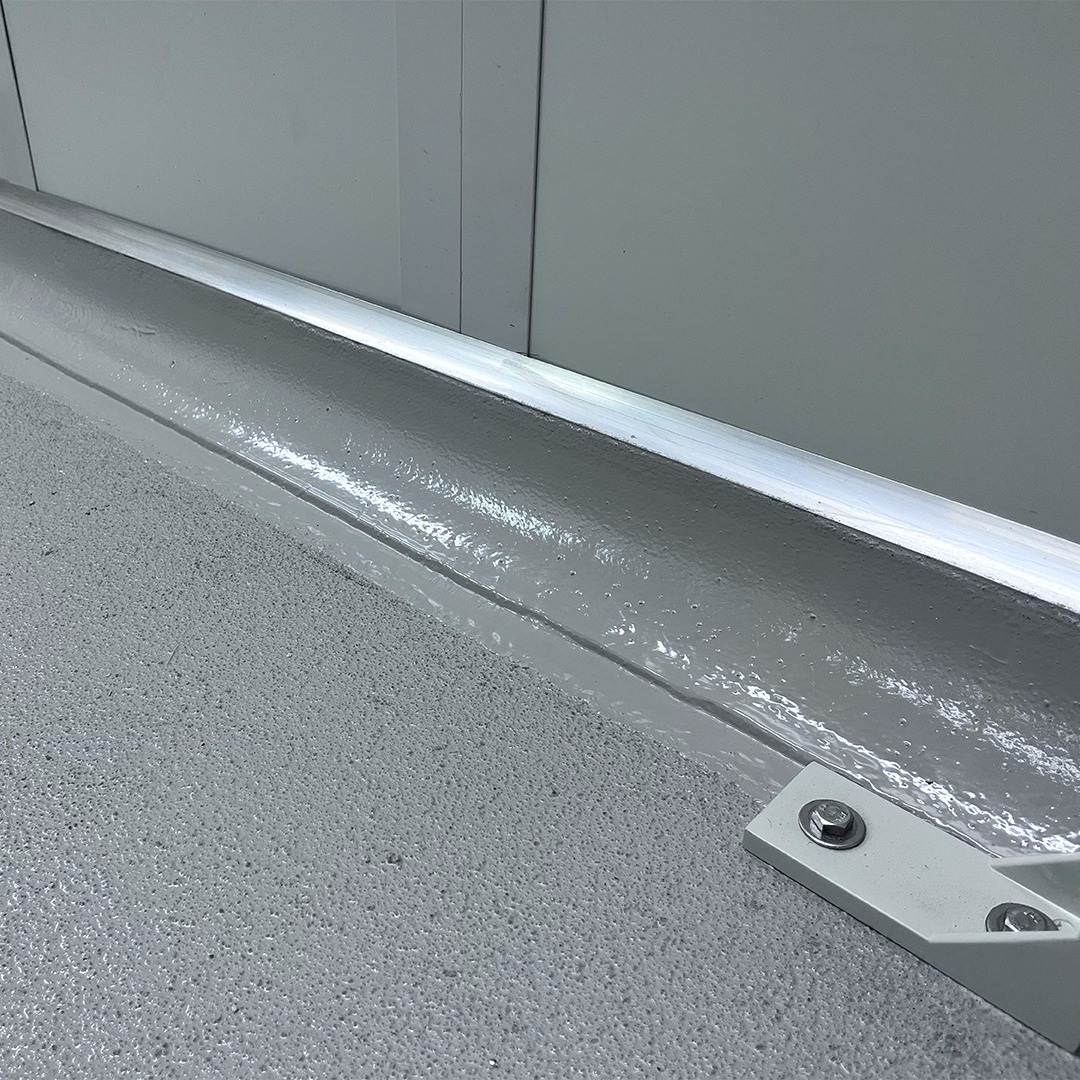
Coved resin skirting where a food grade floor meets the wall

Coving: the detail auditors look for first

The junction where the floor meets the wall is the weakest point in any food production space. A square joint collects product, moisture and cleaning residue, cracks as the two surfaces move independently, and becomes a harbourage point that no amount of cleaning fully resolves.

Coving removes the junction. The floor system is carried up the wall in a continuous radius, so there's no seam for anything to sit in and the whole surface can be hosed down as one.

Why it matters:

  • Seamless floor-to-wall connection — no joint, no gap, no separate skirting to fail
  • Eliminates cracks and bacterial harbourage at the most vulnerable point in the room
  • Cleans down in a single pass, with nothing for a mop or hose to miss
  • Expected under the major food safety schemes — HACCP, AQIS, Food Safe, DPI and BRC audits all scrutinise the floor-to-wall detail

Coving height and radius get set to suit the space and the cleaning regime. It's the detail most often value-engineered out of a job, and the one most likely to cause a problem at the next audit.

Where we install food grade floors in Sydney

Every food business has its own combination of heat, chemicals, water and traffic, and across Sydney that ranges from a western suburbs manufacturing floor to a hotel kitchen in the CBD. The system gets specified against those conditions rather than against the building type:

Food production and processing

Food manufacturers across the Sydney basin running heavy washdown and constant pallet traffic.

Commercial kitchens

Hotel, hospital and institutional kitchens where service genuinely cannot stop for long.

Bakeries and beverage production

Bakeries and beverage production with flour dust, sugar residue and wet zones to seal.

Cold storage and chillers

Cold storage and distribution facilities holding product through the temperature swing.

Hotel, hospital and institutional kitchens

Sydney kitchens running continuous service, where the room cannot close for long.

Safety
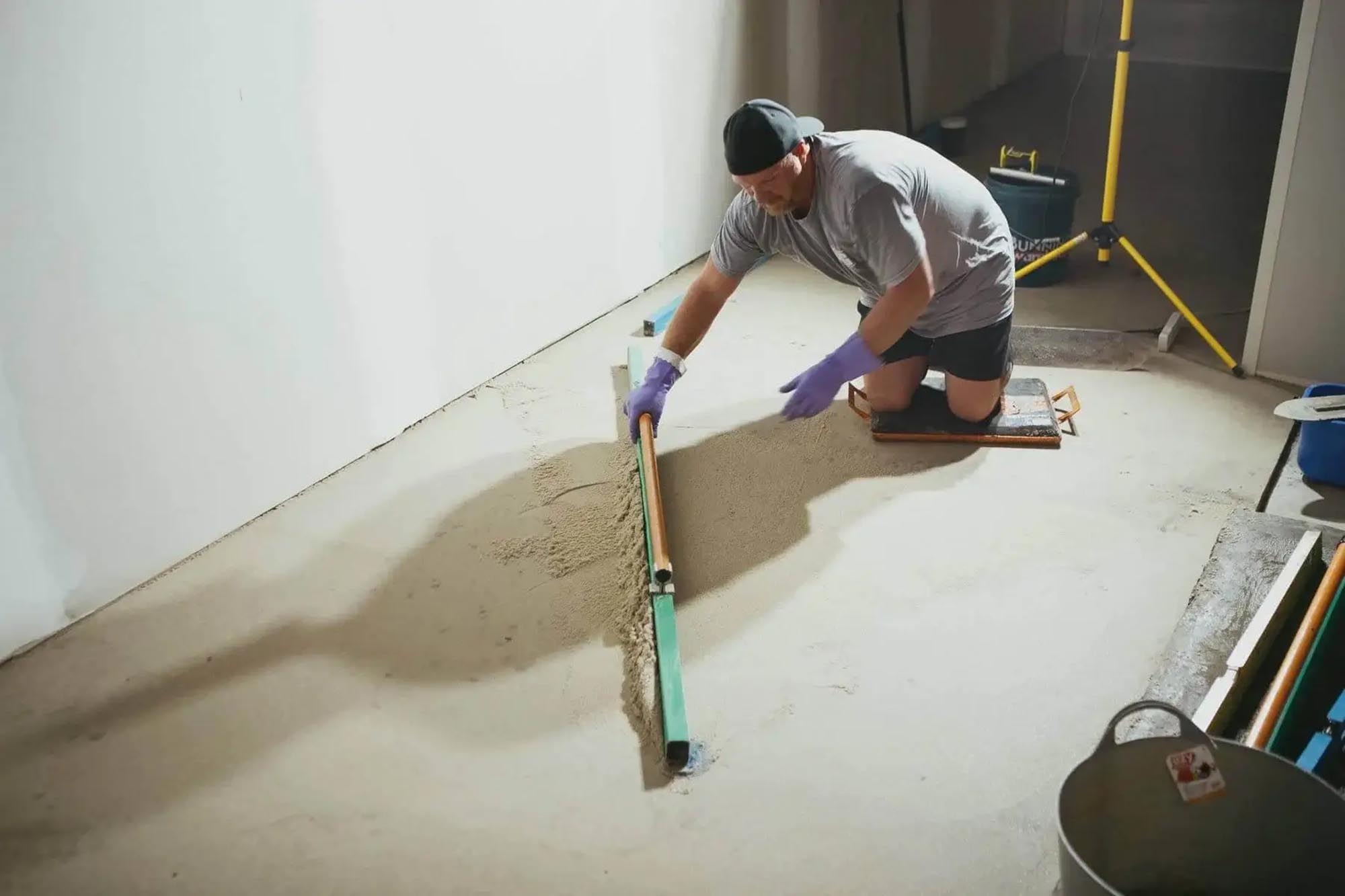
Worker kneeling to spread material across a prepared concrete floor

Falls, drains and slip resistance

Falls to drains. If water sits, the floor has failed regardless of which system went down. Falls are set during installation and taken to the drains rather than assumed from the existing slab, which is often out by more than people expect.

Slip resistance in the real condition. A food production floor needs grip when it's wet and greasy, not when it's dry and clean. Aggregate is broadcast into the system to a specified classification, balanced against cleanability — too coarse and it holds residue, too fine and it does nothing when the floor is wet.

Where you need it documented for an audit or an insurer, we can slip test the finished floor to AS 4663 and provide the P classification in writing.

How a food grade flooring job runs

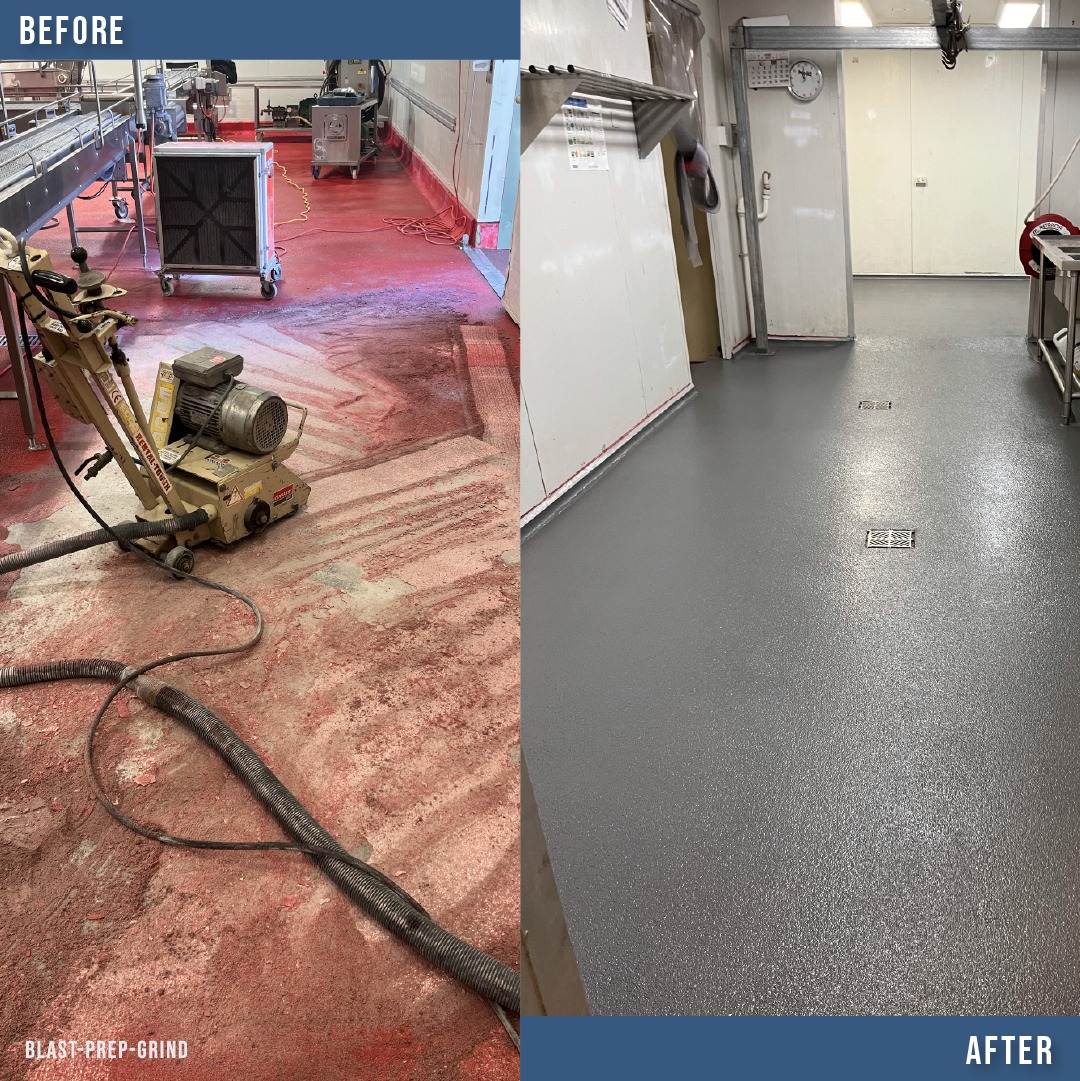
Before and after comparison of an epoxy floor installation
1
Step 1

Assessment and specification

We look at the washdown regime, chemicals in use, temperatures, drainage and the existing slab, then specify a system and coving detail to suit.

2
Step 2

Preparation

The slab is shot blasted or ground to the profile the system requires, and any existing floor is removed properly rather than coated over.

3
Step 3

Falls, drains and detail

Falls are corrected to the drains, drain edges detailed, and coving formed to the agreed height.

4
Step 4

Installation

The system is laid to the specified build, with aggregate broadcast where slip resistance is required.

5
Step 5

Cure and handover

The floor cures to the schedule for the system and conditions, then is handed over with cleaning and maintenance guidance for your team.

Safety
Seamless resin floor in a commercial kitchen

Working around continuous service

Food facilities can rarely stop, so most of this work runs during planned shutdowns, over weekends, or zone by zone while the rest of the plant keeps operating.

That takes planning rather than optimism. Cure times, isolation, extraction and the sequence of areas all get worked out before we mobilise, and we'll tell you honestly whether a scope fits the window you have — a rushed food grade floor is worse than a delayed one.

Where we work

Sydney CBD

Western Sydney

South West Sydney

Northern Beaches

let's connect

Frequently Asked Questions

What is food grade flooring?

A seamless, non-porous floor system suitable for food production and preparation areas. It's coved up the wall to remove the floor-to-wall junction, laid to falls towards drains, resistant to chemicals and thermal shock, and finished to a specified slip classification. Depending on washdown conditions it's built in either epoxy or polyurethane cement.

Should a commercial kitchen use epoxy or polyurethane cement?

It depends on the washdown. PU cement handles hot water, steam cleaning and thermal shock better than epoxy, which can debond under repeated temperature swings. Where conditions are gentler an epoxy system is the more economical choice. We specify based on how the space actually runs.

Why is coving necessary in a food production area?

The floor-to-wall junction is where product, moisture and cleaning residue collect, and where cracks form as the two surfaces move. Coving carries the floor up the wall in a continuous radius so there's no joint to harbour bacteria and the surface cleans down in a single pass. It's one of the first details an auditor checks.

Does food grade flooring meet HACCP requirements?

A correctly specified and installed system — seamless, coved, falling to drains, cleanable and slip resistant — is designed to satisfy the flooring elements of HACCP, AQIS, Food Safe, DPI and BRC audits. Certification applies to your facility and processes as a whole rather than to the floor alone, but the floor is a component auditors examine closely.

How much does food grade flooring cost per square metre in Sydney?

Price depends on the system, the build thickness, coving, drainage detailing, slab condition and how much preparation is needed. PU cement systems cost more than epoxy but last longer under washdown. In Sydney, access moves the number as much as the floor does — a ground-floor food manufacturing unit prices differently to a hotel kitchen several levels up with one service lift and a loading dock booking.

Can you install while we're still producing?

Usually in stages or during a shutdown. Most food grade work runs over weekends, in planned shutdown windows, or zone by zone with the area isolated. Sydney hotel and hospital kitchens rarely close at all, so the work is normally staged overnight across several visits rather than done in one hit. Tell us the window you have and we'll tell you what fits it.

How long before the floor can be used?

Cure times vary by system and temperature. Most take foot traffic before washdown or chemical exposure, and we'll give you the schedule for your specified system before works start so the shutdown can be planned properly.

Can you resurface an existing food grade floor that's failing?

Usually. Failing systems have to come off rather than be coated over — see floor covering removal. We assess what caused the failure first, since a debonded floor is often a preparation or specification problem that will simply repeat.

Business hours

let's connect

Work with us

Contact us to request a Free floor estimate or learn more about our flooring services.

Submit your message
Submit your message
Thank you! Your submission has been received!
Oops! Something went wrong while submitting the form.