
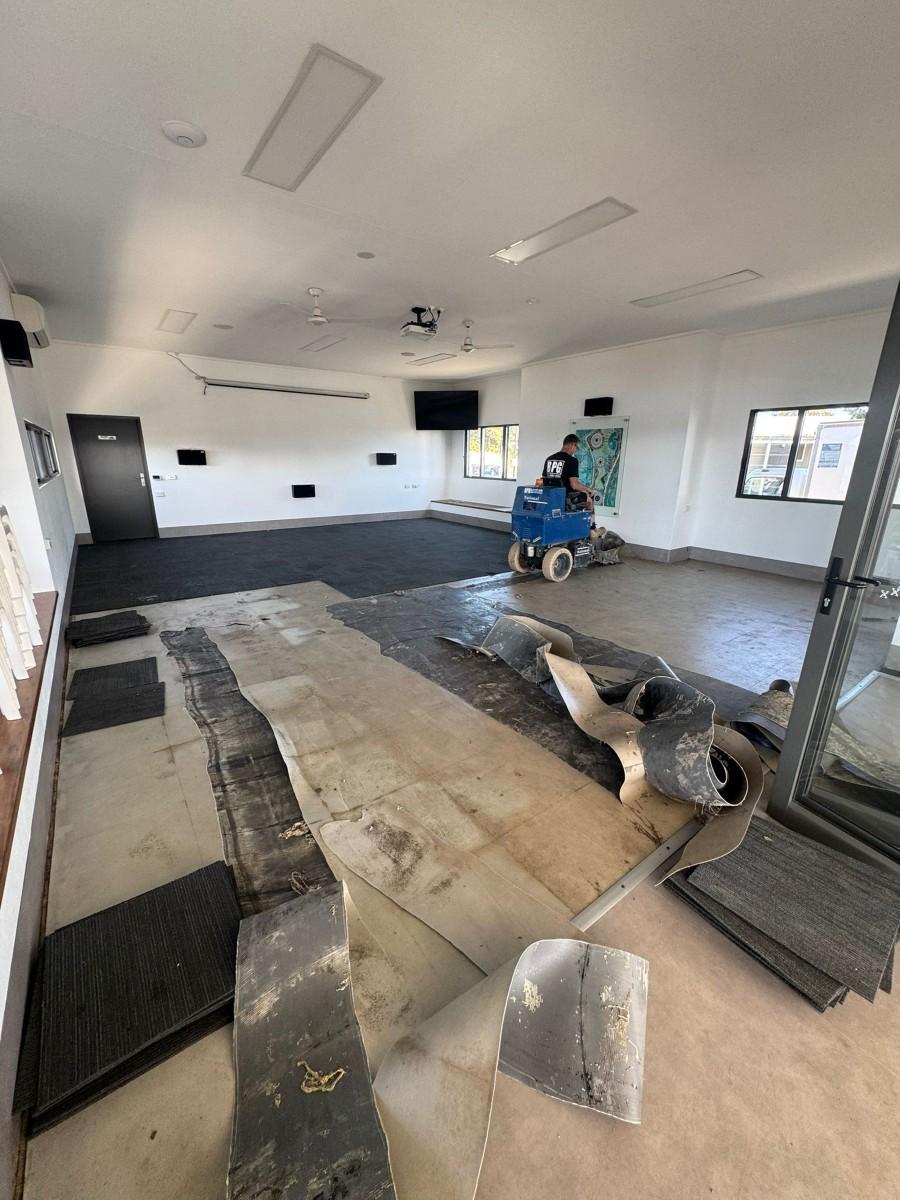
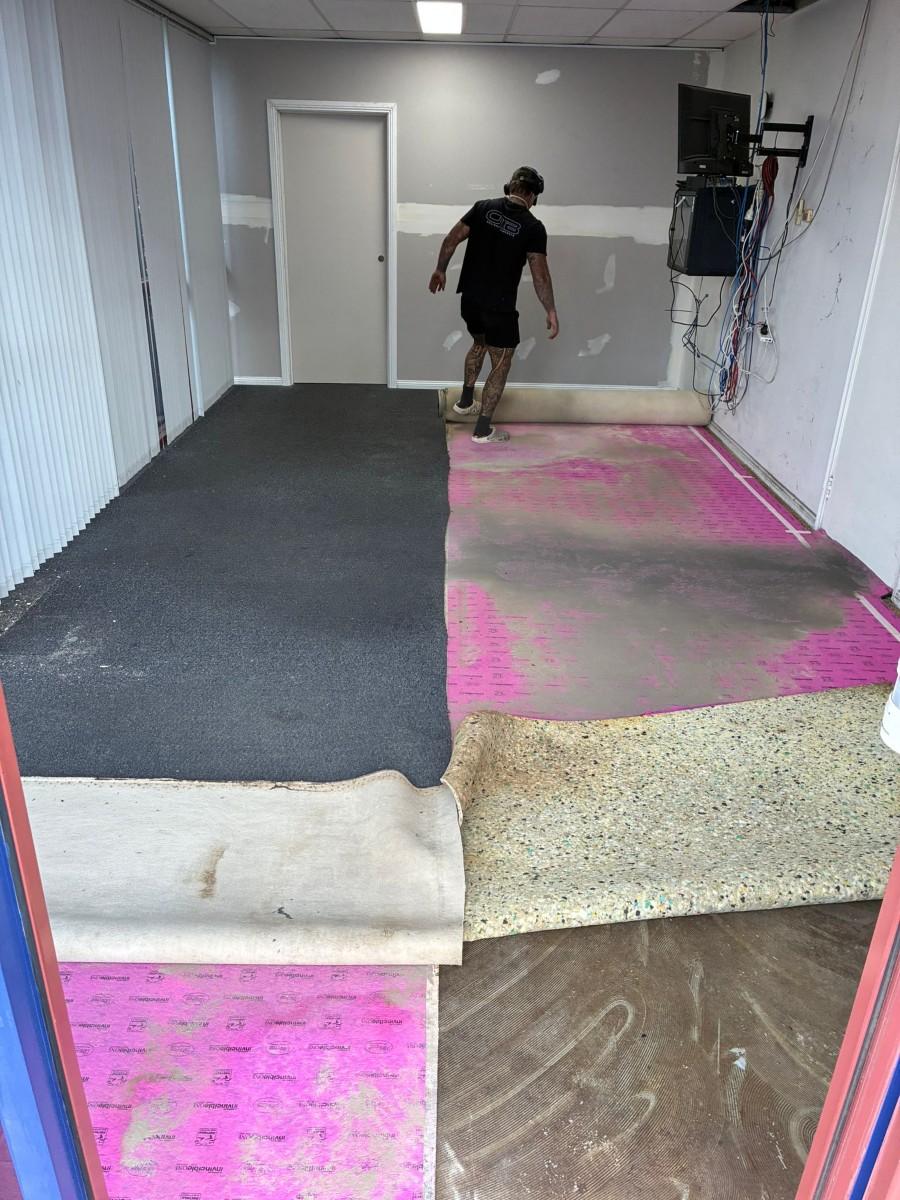
Commercial carpet removal exposing the concrete slab beneath

Commercial Floor Covering Removal

Vinyl, carpet, timber, laminate, adhesive residue and old coatings — stripped back to a sound slab across Newcastle, the Hunter Region, Central Coast and Sydney. Dust controlled, waste removed, floor handed over ready for what goes down next.

Commercial carpet removal in progress on a concrete slab

The covering is the easy part

Most floor covering removal quotes are priced on lifting the material, which is the quick part. What determines whether the next trade can actually start is what's left behind — glue ridges, carpet adhesive, levelling compound, the bottom half of an old coating still keyed into the slab.

We price and plan around the substrate, not the covering. The floor gets handed over as a bondable surface at an agreed profile, so the flooring contractor or coating applicator behind us isn't re-quoting work you thought you'd already bought.

Dust is controlled with continuous H-class extraction and work-area containment, which is what allows removal in occupied tenancies and operating facilities rather than only on vacant sites.
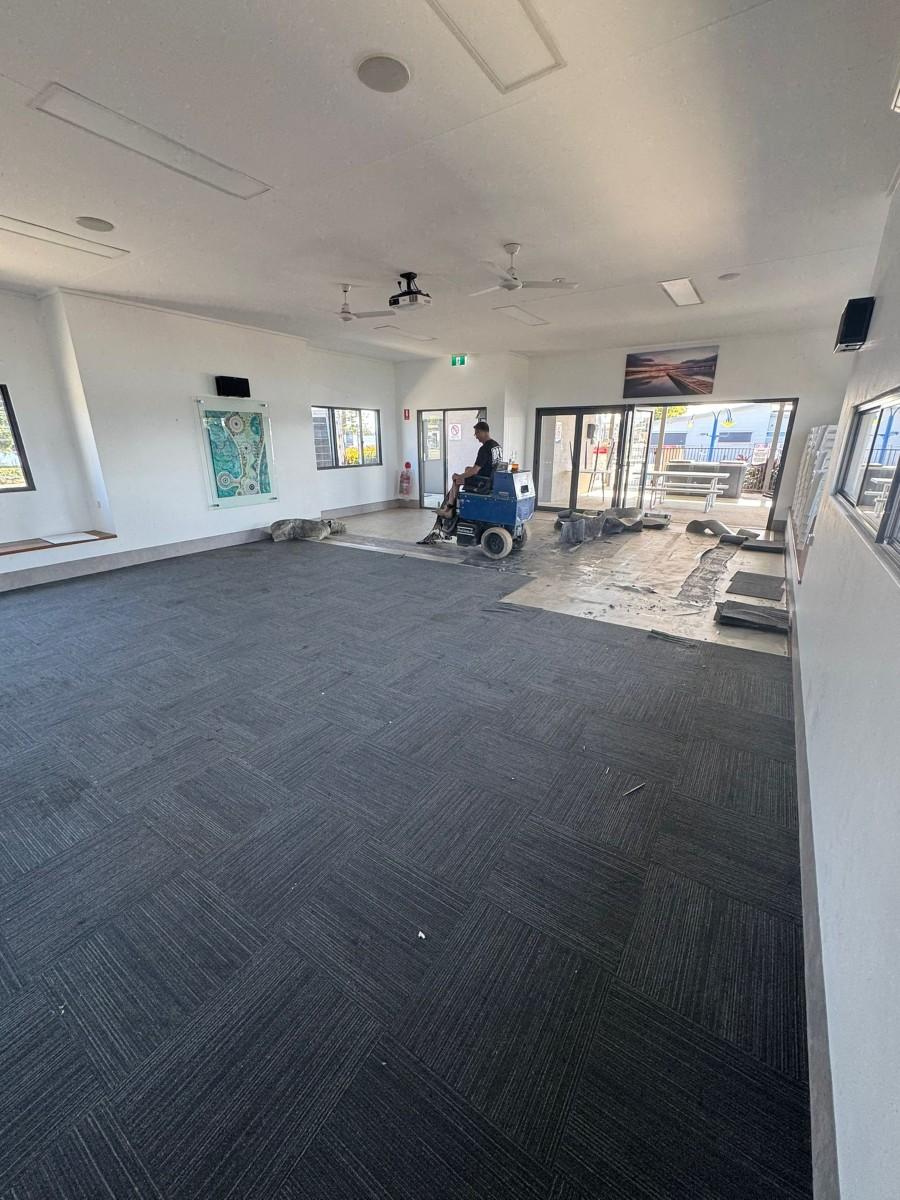
Carpet tile being lifted from a commercial concrete floor

What we remove

Anything sitting between the slab and the room. Some of it lifts, some of it has to be ground or blasted off — and the difference is usually invisible until the first section comes up. We assess before we price so the number doesn't move halfway through:

Vinyl and sheet flooring

Sheet vinyl, safety flooring, vinyl planks, and the adhesive bed underneath.

Carpet and underlay

Broadloom, carpet tile, underlay, and the glue residue left across the slab.

Timber and laminate

Floating floors, glued timber, laminate, plywood underlay and fixing residue.

Coatings and toppings

Epoxy, polyurethane, paint and levelling compound, removed by grinding or shot blasting.

Adhesives and residue

Bitumen, cutback, carpet glue and thinset ground back to a bondable surface.

coatings
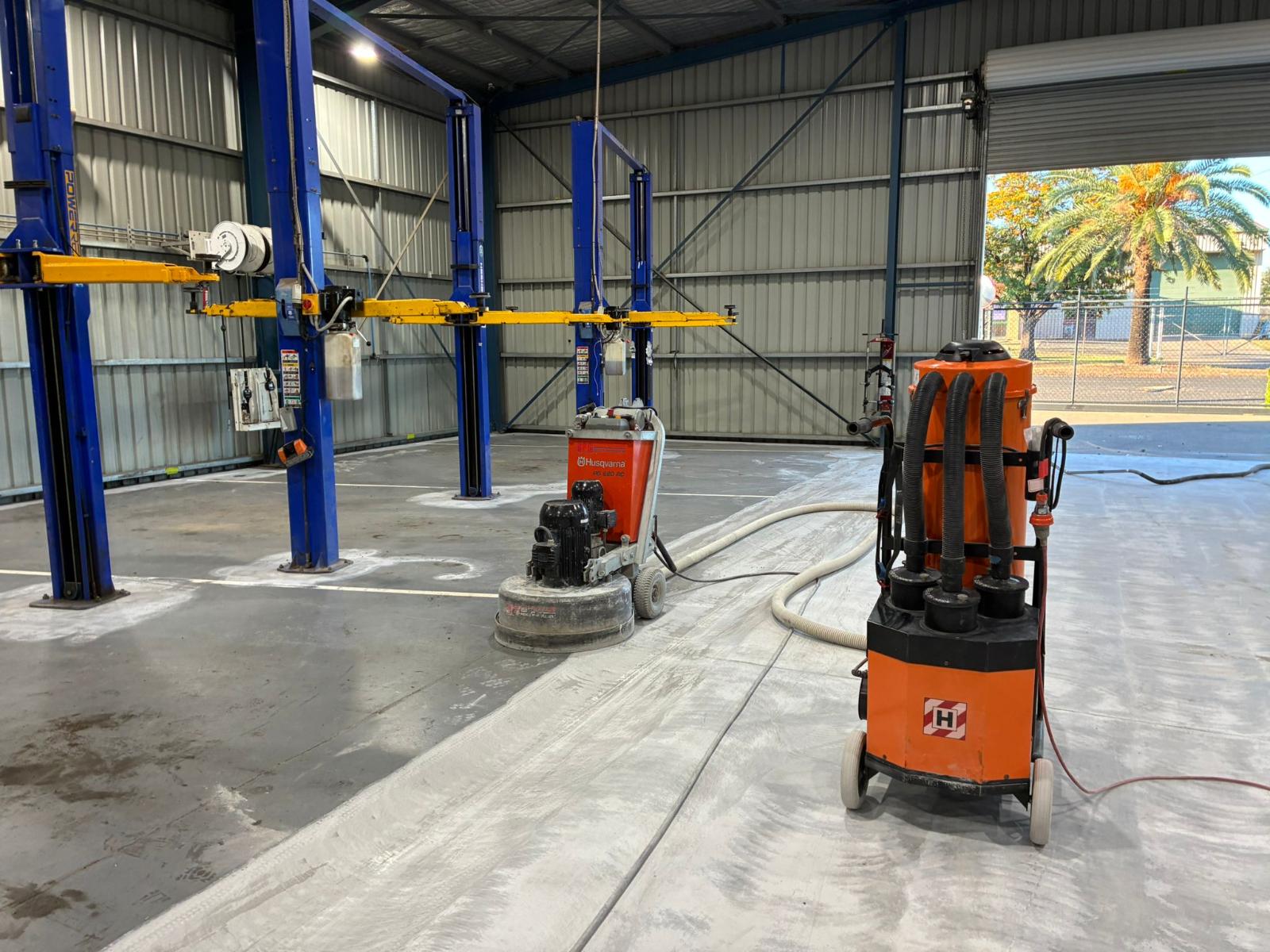
Concrete floor grinding on a commercial slab in Newcastle

Coating and topping removal

Old epoxy, polyurethane, paint and failed levelling compound come off by diamond grinding, shot blasting or scarifying. Which method suits depends on the coating, not the size of the floor — plenty of large industrial floors are better ground than blasted. We run all three, so the recommendation follows the floor rather than the equipment.

Coating removal is normally specified to a surface profile. Tell us what the new system requires and we'll work back from it.

Getting the old coating off properly is what makes the next floor last. Epoxy flooring, polished concrete and new floor coverings all bond to what's underneath them — leave a failing coating in place and the new system inherits the failure. See concrete floor preparation for what happens to the slab afterwards.

How the job runs

Commercial carpet removal exposing the concrete slab beneath
1
Step 1

Site assessment

We attend site to identify what's down, what's underneath it and what condition the slab is in. Anything suspected of containing asbestos gets flagged at this point, and we confirm the surface profile the next system will need.

2
Step 2

Set up and containment

Carpet, laminate and vinyl planks lift dry and need little more than protection to the route out. Grinding or blasting adhesive and coatings gets extraction and a sealed work area.

3
Step 3

Strip and remove

The covering comes up, then the adhesive and residue are ground or blasted back. Debris stays contained and is carted out as we go rather than stockpiled on site.

4
Step 4

Slab preparation

The surface is taken to the agreed profile so the next system has something to bond to

5
Step 5

Clean handover

The floor is vacuumed and handed over ready for the following trade. Waste disposal is set at quote stage — into your bins, your waste contractor, or removed by us if that's what's agreed.

Compliance
Ride-on floor scraper lifting sheet flooring away from a concrete slab

Asbestos in older floor coverings

Vinyl sheet flooring, vinyl tiles and the black bitumen adhesive beneath them are among the more common places asbestos still turns up in commercial buildings. Where a building predates 1990, it's worth treating as a possibility until testing confirms otherwise.

If we suspect ACM during assessment, we'll pause and let you know before going any further. A licensed asbestos removalist handles the removal, and we come back once clearance has been issued to take the slab back to a bondable surface.

Asbestos turns up often enough in older commercial buildings that it rarely surprises us. Letting us know the building's age when you enquire means we can allow for testing and licensed removal in the original quote, rather than revising it once work has started.

Where we work

NewCastle

Hunter Valley

Central Coast

Sydney

Ready to start?

Get your floor covering removal priced

FAQ

Frequently Asked Questions

What does commercial floor covering removal cost?

Pricing is per square metre and depends far more on what's under the covering than the covering itself. Carpet over a clean slab is cheap; sheet vinyl over bitumen adhesive, or a failed epoxy needing shot blasting, is not. Access and out-of-hours work also change the number. You can send us through the floor area, covering type and building age.

Do you remove the glue and adhesive as well?

Yes, and it's the part that matters. We take the slab back to a sound, bondable surface at the profile the next system needs, rather than leaving residue for the following trade to price around.

Can you work in an occupied building?

Yes. Lifting carpet, laminate or vinyl planks generates very little dust to begin with. For the dustier work — grinding adhesive or blasting coatings — H-class extraction and work-area containment are what make it possible. Much of this work runs at night, on weekends or in staged handover areas so the facility keeps operating.

Could my old vinyl flooring contain asbestos?

If the building was constructed before 1990, it's possible — vinyl sheet, vinyl tiles and black bitumen adhesive are common locations. Testing is the only way to confirm; visual identification isn't reliable. We flag suspected material at assessment and licensed removal happens before we proceed.

What's the difference between grinding and shot blasting?

Grinding uses diamond tooling and gives more control over the finish, and it handles coatings that don't respond well to blasting. Shot blasting propels steel shot at the slab, stripping coating and profiling in one pass. Which suits depends on the coating and the profile the new system needs rather than the size of the floor — plenty of large industrial floors are better ground than blasted. We run both, so the recommendation follows the floor.

How long does it take?

It depends on area, covering type and how much adhesive or coating has to come back. Once we do a Free on site consultation, we will be able to determine the time frame the job can be complited.

Business hours

let's connect

Work with us

Contact us to request a Free floor estimate or learn more about our flooring services.

Submit your message
Submit your message
Thank you! Your submission has been received!
Oops! Something went wrong while submitting the form.