
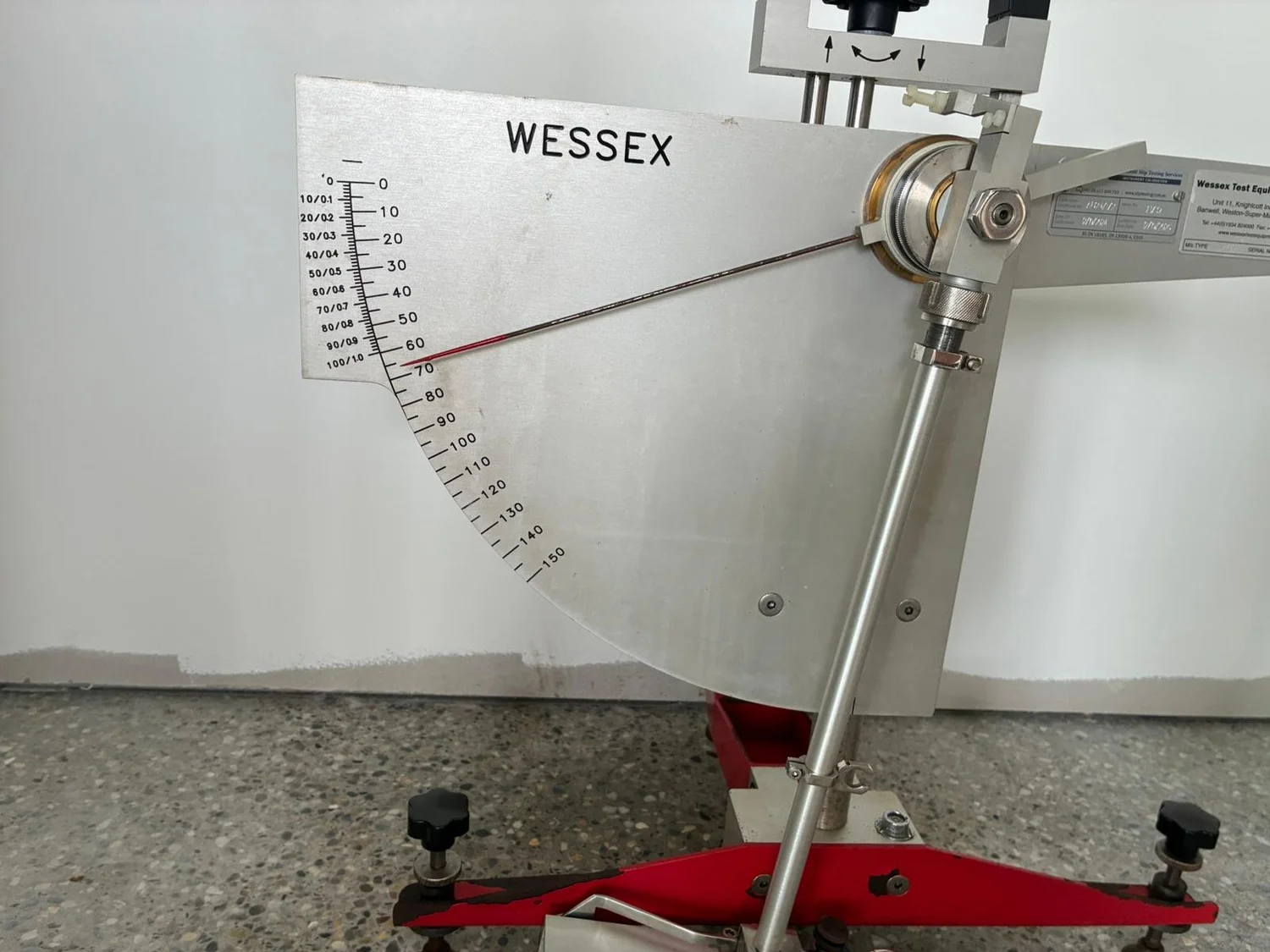
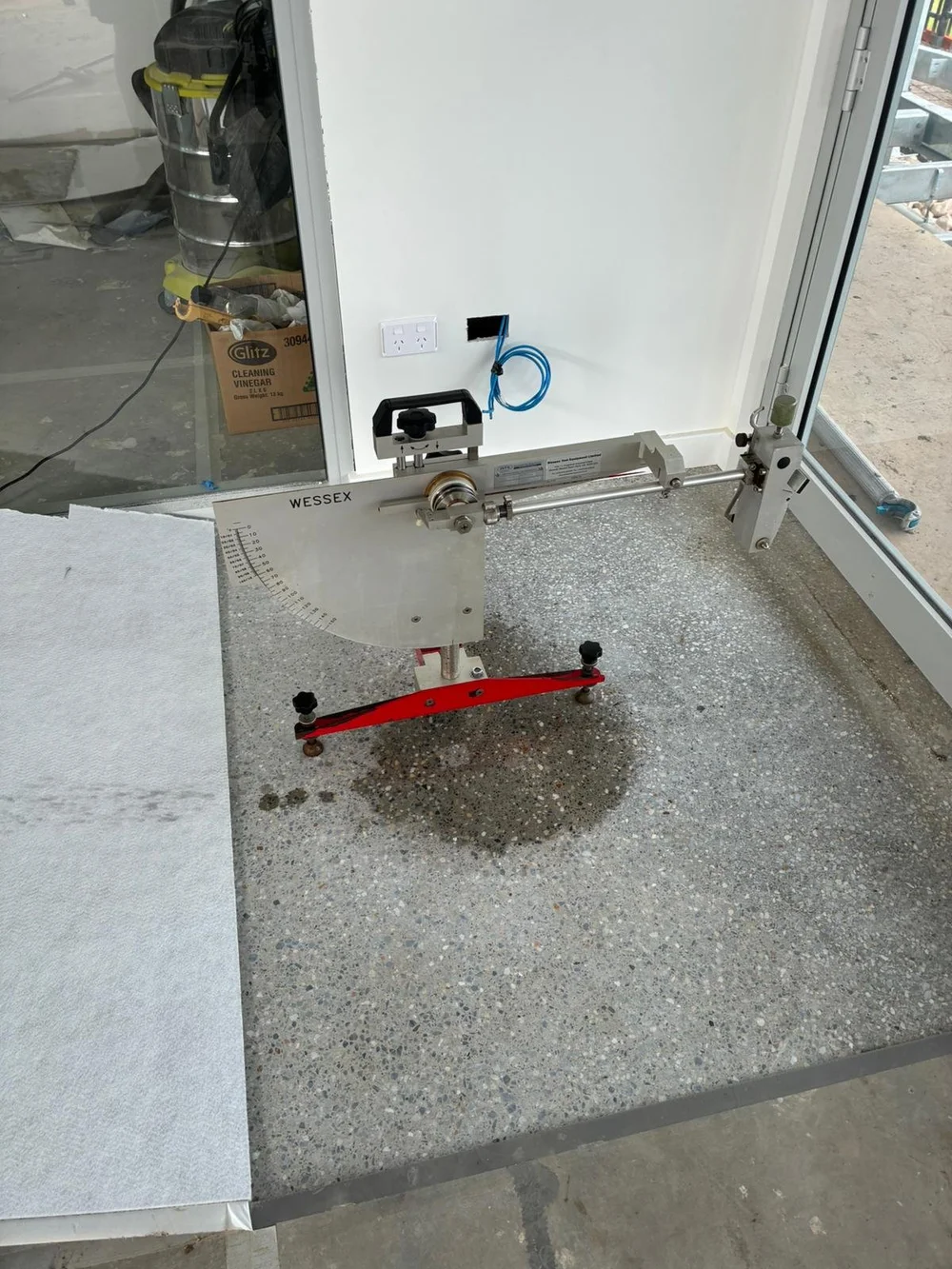
Pendulum test machine set up on a floor for slip testing

Floor Slip Resistance Testing in Newcastle, NSW

Ensure your floors meet safety standards with professional slip resistance testing in Newcastle, NSW. Using certified wet pendulum testing equipment, Blast Prep Grind accurately measures slip resistance to help reduce accidents and maintain compliance.

Wet pendulum slip testing machine

What we test and which standard applies

Two Australian Standards govern slip resistance, and which one applies depends on whether the floor is already down.

AS 4663 covers existing, installed pedestrian surfaces. This is on-site testing, and it's what most commercial clients need — incident investigations, insurance requirements, tenancy handovers, routine safety audits and post-maintenance verification.

AS 4586 covers new surface materials, tested in a laboratory before specification. If you're choosing a product, that data should come from the manufacturer.

We test in-situ to the AS 4663 wet pendulum method using [slider 96 for shod pedestrian areas and slider 55 where specified]. Results are reported as a Slip Resistance Value and a classification from P0 to P5, alongside the benchmarks in HB 198:2014 for the area's intended use.

Surfaces we test: concrete, polished concrete, epoxy and resin coatings, sealed floors, tiles, vinyl, external paving, stair nosings, ramps and loading docks.
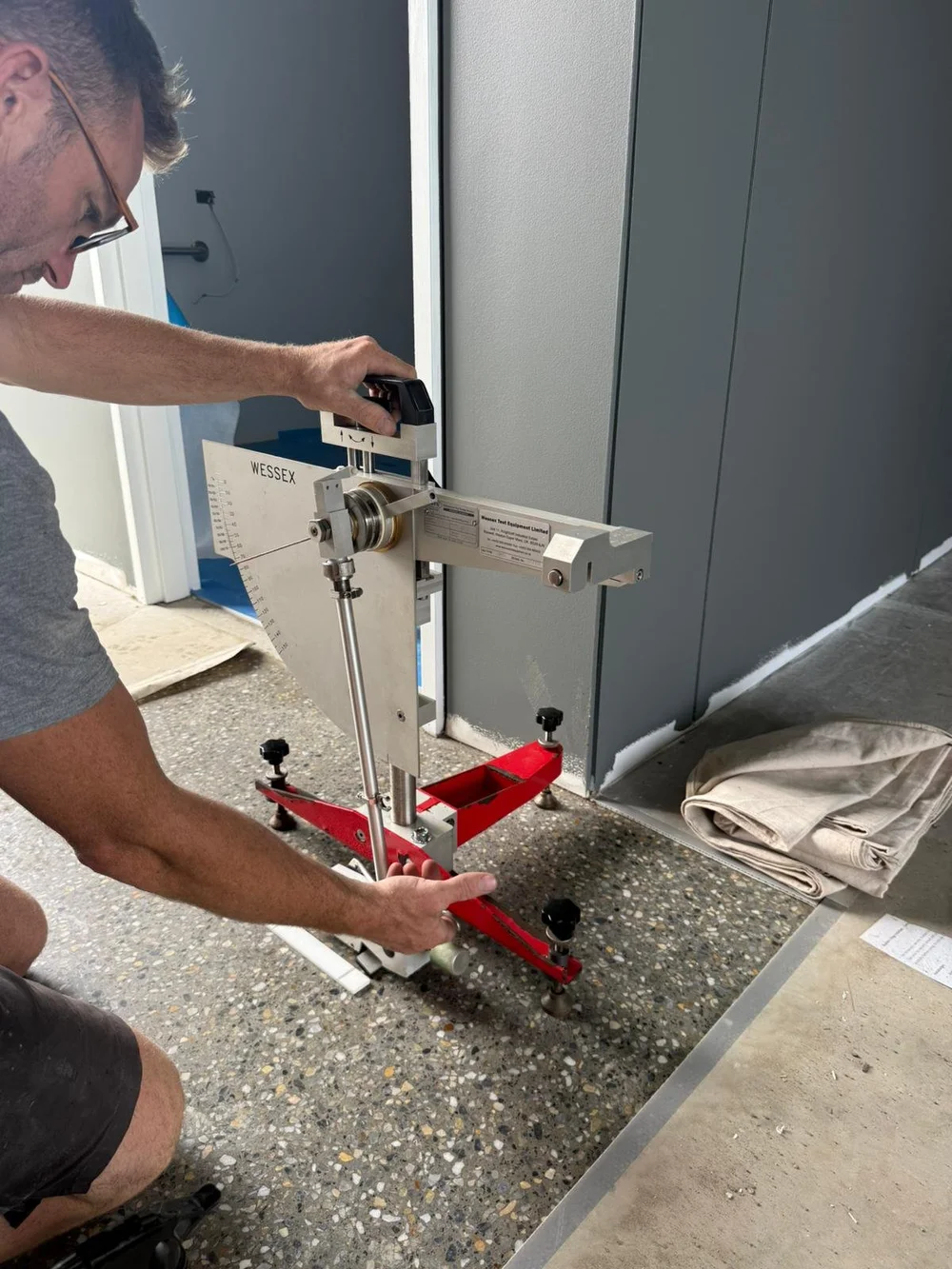
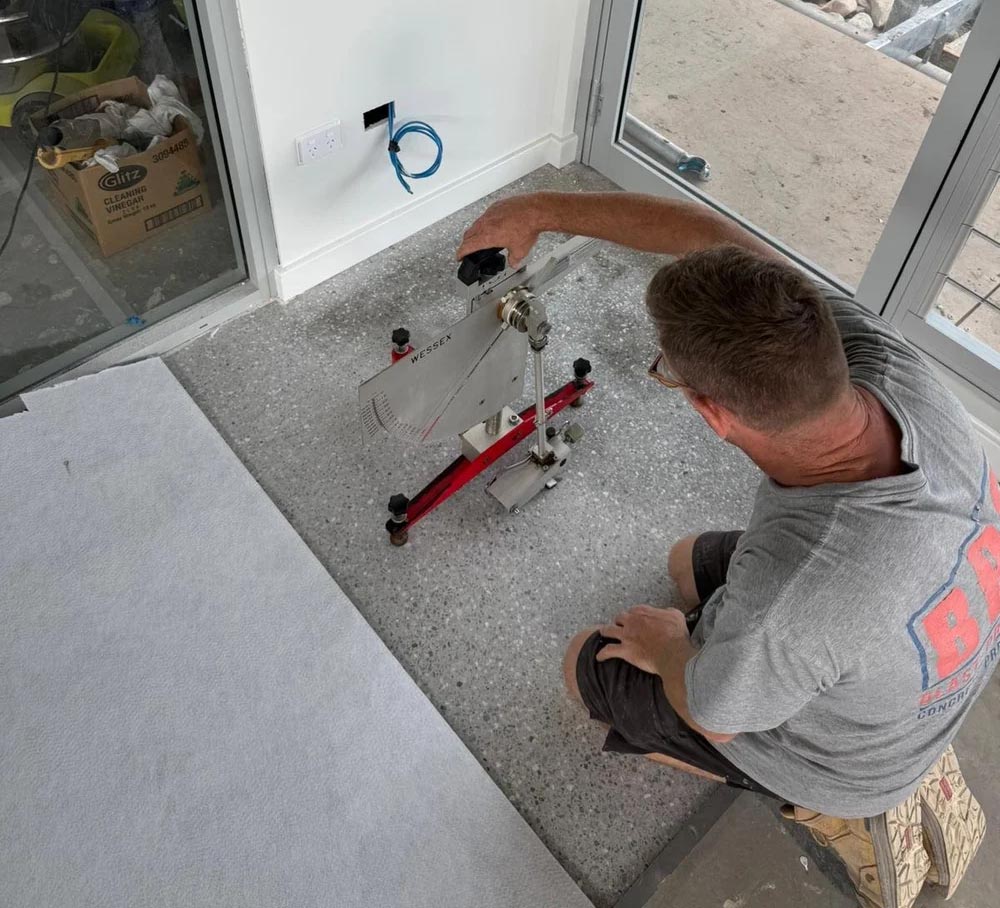
Slip resistance testing in progress in Newcastle NSW

Where slip testing gets called for

Slip testing rarely gets booked out of curiosity. It's usually triggered by something specific — an insurer asking questions, a tenancy changing hands, an audit finding, or someone going over on a wet floor. The floors that end up being tested tend to be the ones where water, oil or foot traffic meet a surface that was specified for something else. These are the sites and situations we're called to most:

Food production and commercial kitchens

Wash-down zones, cool rooms and prep areas where water and oil meet the floor.

Warehouses and distribution

Dock aprons, ramps, transition zones between concrete and coated areas

Retail and shopping centres

Entry zones after rain, common walkways, and floors changing hands at tenancy handover.

Offices and public buildings

Lobbies, stairs, ramps and the accessible paths of travel between them.

Aged care, health and education

Corridors, bathrooms and entries, where a fall carries the worst consequences.

Compliance
Slip resistance testing on a floor in Newcastle NSW

We can tell you how to fix it, not just that it's slippery

Most slip testing in Australia is done by labs that hand over a number and leave. If the result is a fail, you're then finding a contractor, explaining the problem again, and hoping their fix actually moves the reading.

We're a concrete preparation and coatings business that also tests, so the report doesn't stop at the result. It tells you what would bring the surface up to the classification the area needs:

  • Diamond grinding or honing to change the surface profile
  • Anti-slip coatings and broadcast systems specified to hit a target P-rating
  • Epoxy and resin systems with slip-resistant aggregate for wet and oily areas
  • Targeted treatment of the zones that failed, rather than recoating an entire floor

Remediation is quoted as a separate job. If you'd like us to do it, we'll price the work and retest afterwards so you have evidence the issue was closed out. If you'd rather use your own contractor, the report gives them a clear specification to work to.

How a slip test runs

Slip resistance testing in progress in Newcastle NSW
1
Step 1

Scope

Tell us the site, the areas of concern. We'll confirm how many test locations the floor needs.

2
Step 2

On-site testing

Testing to AS 4663 across representative locations, with a minimum of five swings per location. Areas are isolated briefly; we work around trading hours where the space can't be closed.

3
Step 3

Report

Slip Resistance Values, P classifications per area, photographs and location plan, benchmarked against HB 198:2014 for the intended use.

4
Step 4

Recommendations

Where a surface falls short, the report tells you what would bring it up to the classification the area needs — surface profile changes, coating options, or targeted treatment of the zones that failed.

5
Step 5

Remediation

If you want us to carry out the work, we'll quote it as a separate job and retest afterwards to verify the result. You're equally free to take the report to your own contractor.

Where we work

NewCastle

Hunter Valley

Central Coast

Sydney

Ready to start?

Book a slip test today

let's connect

Frequently Asked Questions

What is a wet pendulum slip test?

A pendulum arm with a spring-loaded rubber slider strikes the wetted floor surface, simulating a heel contact. The resistance is recorded as a Slip Resistance Value and converted to a classification from P0 to P5, where P5 is the highest slip resistance and P0 the lowest.

What P rating does my floor need?

It depends on the area's use. HB 198:2014 sets out recommended classifications by application — external ramps and communal wet areas typically call for P4 or P5, while dry internal areas may only require P2 or P3. We benchmark your results against the relevant use in the report.

What's the difference between AS 4586 and AS 4663?

AS 4586 classifies new surface materials tested in a laboratory, used at specification stage. AS 4663 measures existing installed floors on site. If your floor is already down, AS 4663 applies.

What's the difference between a P rating and an R rating?

P ratings come from the wet pendulum test and can be measured on an installed floor. R ratings come from an oil-wet inclined ramp test, which can only be performed in a laboratory on new materials — so an R rating cannot be established for a floor already in service.

Do I legally need slip testing?

The NCC sets mandatory slip resistance requirements for stairs, nosings, ramps and landings, but those don't cover every pedestrian surface. Broader WHS duties and general duty of care usually drive the requirement, particularly after an incident or when an insurer asks.

How long does testing take and when do I get the report?

Most commercial floors are tested in a day depending on area count. Reports can be issued the same day.

What does slip testing cost?

Pricing is based on the number of test locations and site access rather than floor area. Contact us to receive a free floor estimate.

Can a slippery floor be fixed?

Usually, yes. Depending on the surface, options include diamond grinding to alter the profile, anti-slip coatings, or a resin system with slip-resistant aggregate. The test report identifies which approach suits your floor and the target classification to aim for. If you'd like us to carry out the work, it's quoted separately and we retest afterwards to verify the result.

Business hours

let's connect

Work with us

Contact us to request a Free floor estimate or learn more about our flooring services.

Submit your message
Submit your message
Thank you! Your submission has been received!
Oops! Something went wrong while submitting the form.