Concrete floor grinding on a commercial slab in Newcastle

Concrete Floor Preparation in the Hunter Region

Shot blasting, diamond grinding and scarifying for commercial and industrial floors across Maitland, Cessnock, Singleton and the Hunter Valley. We prepare slabs to the profile your coating or flooring system specifies, and hand them over ready to bond.

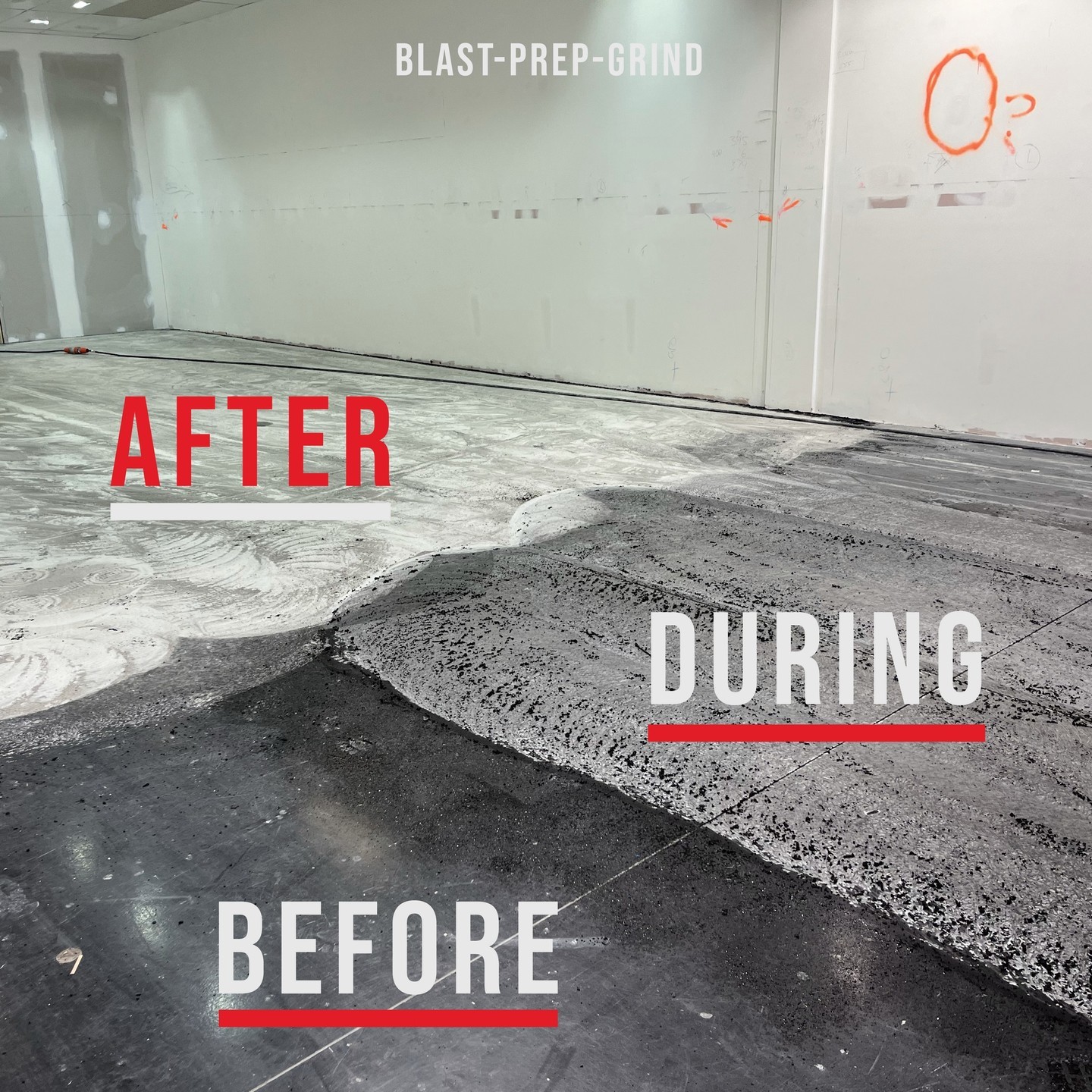
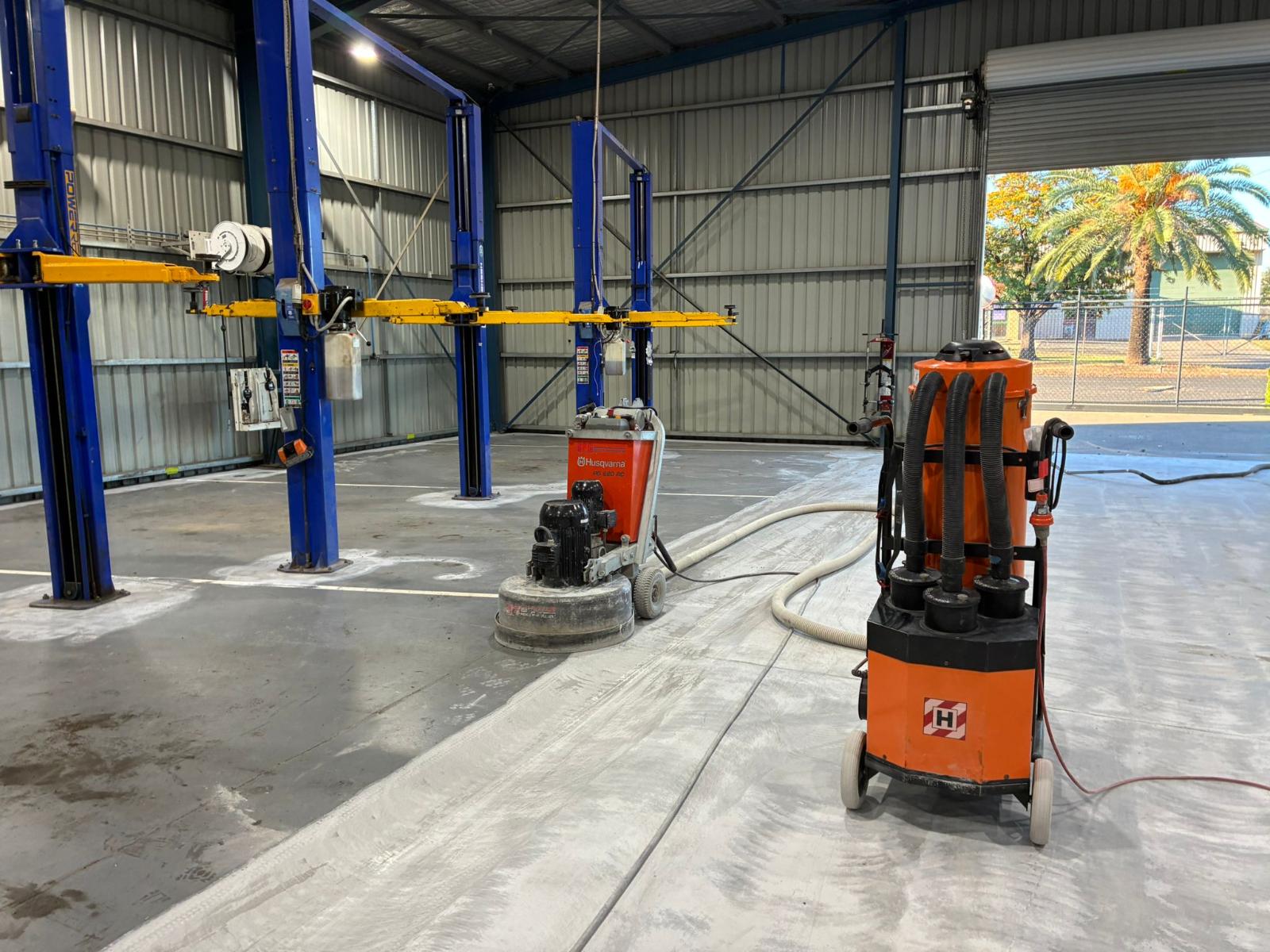
Floor grinder with dust extraction working across a large warehouse slab, half of it ground back

Getting the slab right before anything goes down

Most of the failed floors we get called out to across the Hunter didn't fail because of the coating. They failed because of what was under it — laitance left in place, a profile that never got close to what the data sheet asked for, contamination nobody checked for. By the time it lifts, the fix costs more than the original job.

That's the whole argument for treating prep as its own trade rather than the first hour of the coating job. We profile to the CSP the system calls for and check it as we go, so the applicator behind us is starting from a known surface. If the coating isn't specified yet, we install those too — tell us how the space gets used and we'll recommend a system and prepare to suit it. See epoxy flooring and polished concrete.
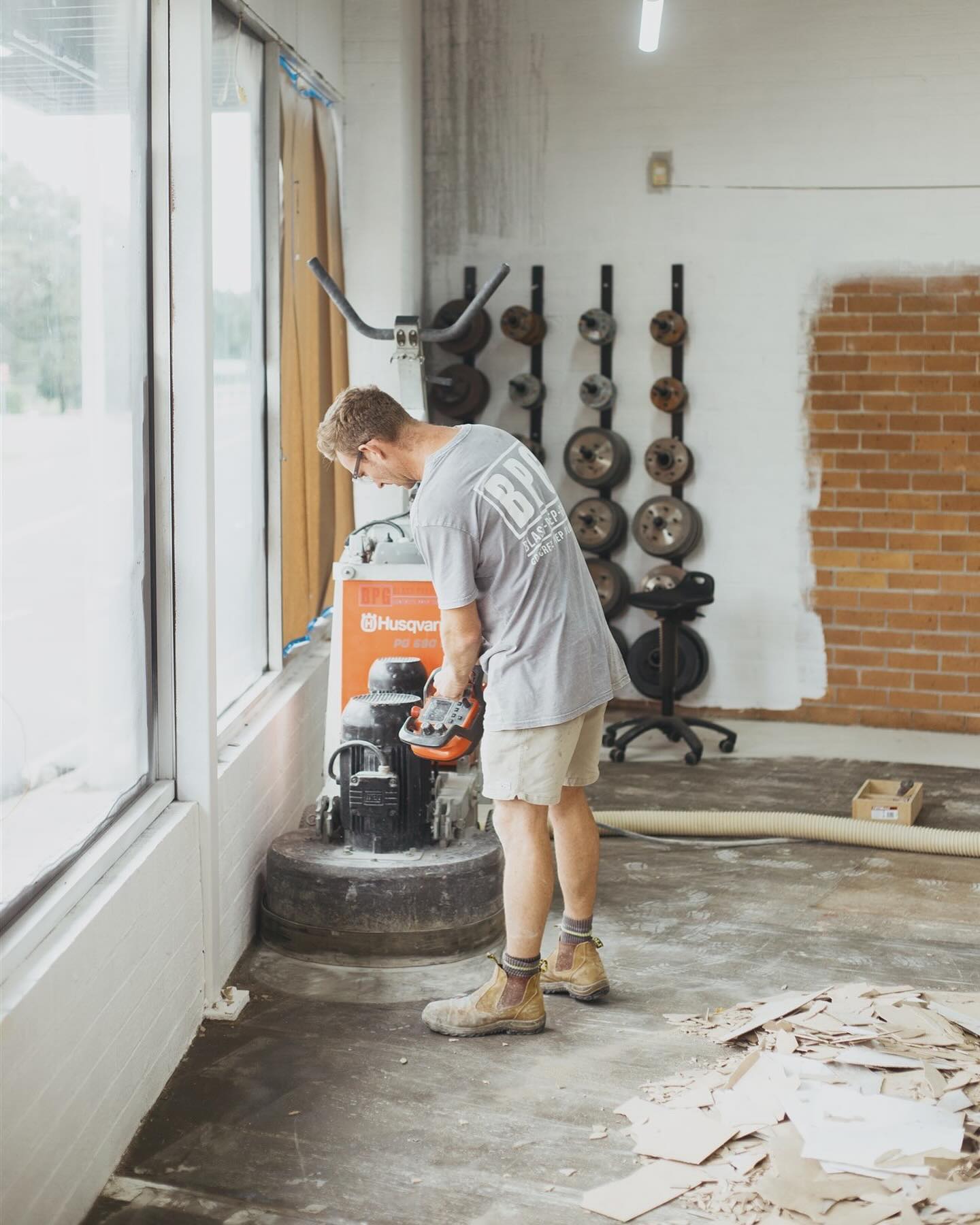
Operator running a floor grinder beside a window, with lifted floor covering stacked on the slab

How we prepare concrete floors in the Hunter Region

Two methods do most of the work — shot blasting and diamond grinding — and the right one depends on the slab, what's on it and the profile you need. Scarifying and captive blasting cover the rest:

Shot blasting

Steel shot fired at the slab, stripping contaminants and profiling in one pass.

Diamond grinding

Controlled removal of laitance, coatings and high spots with a consistent finish.

Scarifying

Aggressive removal of thick coatings, adhesive build-up and surface concrete.

Edges and detail

Hand grinding to walls, columns, plinths, penetrations and tight plant areas.

Profiling to spec

Slab finished to the CSP profile the coating or flooring data sheet calls for.

techniques
Concrete grinding on a commercial floor in New South Wales

Shot blasting and diamond grinding

Shot blasting propels steel shot at the slab under a contained hood, stripping laitance, curing compounds and contaminants while leaving an even textured profile. The shot and debris are recovered and separated as it runs, so it's a near dust-free process — worth being precise about, since it isn't entirely dust free and anyone claiming otherwise hasn't run one. It moves quickly across open floor plate and delivers a consistent, repeatable profile, which is why most epoxy and resin systems specify it.

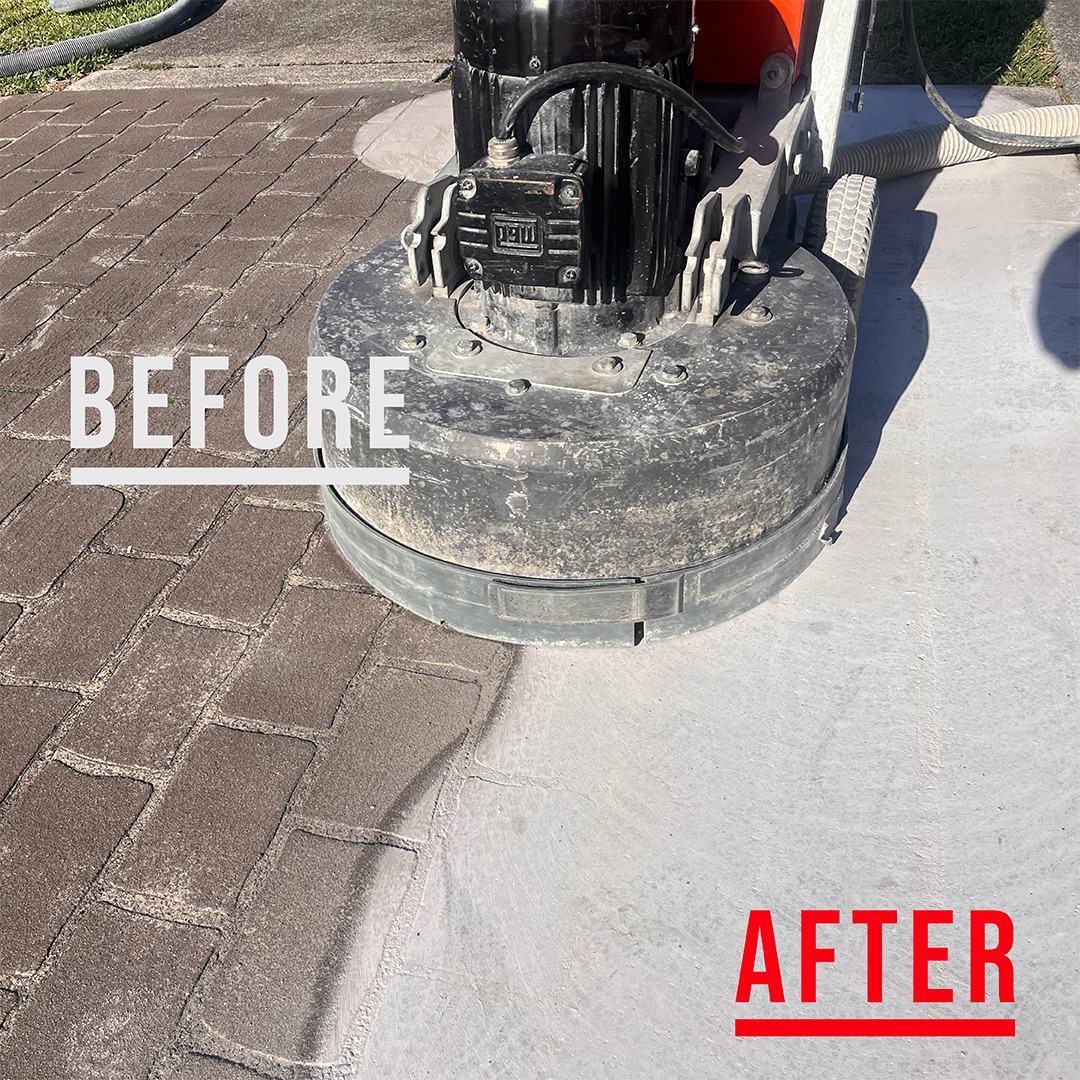
Diamond grinding cuts the surface with diamond tooling under vacuum extraction. It gives more control than blasting, handles coatings that blasting won't shift cleanly, takes high spots down, and produces a finer finish where the covering is thin or the flatness matters. Large floors are often better ground than blasted — it depends on the slab and the specification, not the square metreage.

Which method we use depends on the condition of the floor and the system that will be installed. During our free site visit we can advise you which would be the most suitable method for your project.

How the job runs

Concrete surface preparation on a Newcastle commercial floor
1
Step 1

Site assessment

We check slab condition, existing coatings, contamination, flatness and access. Suspected asbestos gets flagged before anything starts.

2
Step 2

Set up and containment

Extraction connected, work area separated from occupied space, protection to the route out. Most prep is dusty work and it's contained accordingly.

3
Step 3

Blast, grind and detail

Open floor blasted or ground to profile, edges and detail worked by hand. We check the profile as we go rather than at the end.

4
Step 4

Handover

Floor vacuumed and handed over at the specified profile, ready for whoever is laying the new system. Waste disposal is set at quote stage.

Services
Concrete grinding on a commercial floor in New South Wales

Where floor prep gets called for in the Hunter

Mining services workshops and heavy vehicle bays around Singleton and Muswellbrook are rarely clean slabs — years of hydraulic oil, diesel and degreaser soak into the concrete, and it has to be ground or blasted out rather than washed off before any coating will hold. Warehouses and distribution sheds through the Rutherford and Thornton industrial estates at Maitland, and newer builds in the Hunter Economic Zone near Kurri Kurri, come to us before a coating goes down, because a power-floated slab is far too closed to bond to and has to be opened up first. Wineries, cellar doors and food production sites across Pokolbin and the Hunter Valley need a heavier profile again, since hygienic resin systems are laid thick and go into wet, acidic washdown conditions where a coating that lets go becomes a contamination problem. Retail and hospitality floors in Maitland and Cessnock are the opposite case — vinyl and carpet tile need a flat, clean substrate rather than an aggressive one, so the work there is taking off adhesive and knocking down high spots. And a good share of our work is floors where a coating has already failed and the slab has to be taken right back before anything new is worth putting on it.

We offer floor prep as a standalone service for Hunter builders and flooring contractors, or as the first stage when we install epoxy flooring or polished concrete. Where an old covering has to come off first, we recommend floor covering removal, usually quoted with the prep as one job.

Where we work

Maitland

Cessnock

Singleton

Hunter Valley

Ready to start?

Get your Hunter Region floor preparation priced

FAQ

Frequently Asked Questions

What does concrete floor preparation cost in the Hunter Region?

Every floor prices differently, because the cost is driven by what's on the slab rather than by how big it is. A general grind to open up a slab for an epoxy system sits at one end; taking off glues, toppings or a failed coating sits at the other. Area, access, out-of-hours work and the amount of edge and detail work all move the number, and a lot of what we price across the Hunter is workshop, warehouse and winery floor, which sit in quite different parts of that range — an oil-soaked workshop slab needs far more taken off it than a clean new shed. We price the actual floor rather than work from a rate card, and the site visit costs nothing — the quickest way to get a real figure is to send us the details — the floor area, what's down now and what's going down afterwards — and we'll come back with a proper price.

Shot blasting or diamond grinding — which do I need?

It depends on the slab and the specification, not the size of the floor. Shot blasting is fast across open floor plate and gives a consistent profile, which suits most resin systems. Grinding offers more control, handles coatings blasting won't shift cleanly and takes high spots down. We walk the floor before quoting anywhere across the Hunter, from Maitland out to Muswellbrook, so the method is settled before anyone mobilises.

What is a CSP profile?

The ICRI concrete surface profile scale, running CSP 1 to 9, describes how rough a prepared slab is. Coating and flooring manufacturers specify a CSP in their data sheets, and the warranty generally depends on it being achieved. Tell us the system and we'll prepare to its number.

Is shot blasting dust free?

Close to it, though not literally. The shot and debris are recovered under a contained hood as the machine runs, which keeps dust down to the point where blasting is viable inside occupied buildings. There's still some, so we contain the work area and run extraction alongside it.

Can you work out of hours or during a shutdown?

Yes. Much of our Hunter prep work runs at night, on weekends or during planned shutdowns — mine site workshops work to maintenance shutdown windows, wineries need their production floors back before vintage, and food production lines and aged care kitchens have to be handed over empty and back in use the next morning.

How long does floor preparation take?

A day is the useful unit. An open 500 m² warehouse floor at Rutherford or Thornton will blast in a day; the same area of oil-soaked workshop slab around Singleton, with pits, plinths and edge work, can run to three. Access moves the number more than area does — a drive-through shed with a roller door at each end is a different job to a winery production room with tanks fixed to the floor and a single doorway. We give you a day count with the quote rather than a range, and where the floor has to be back in use by Monday we plan the shifts around that.

Business hours

let's connect

Work with us

Contact us to request a Free floor estimate or learn more about our flooring services.

Submit your message
Submit your message
Thank you! Your submission has been received!
Oops! Something went wrong while submitting the form.